The crisp filo pastry
Sheets of dough as thin as paper, buttered and stacked, that give baklava its characteristic golden crisp.
Thin layers of filo pastry, nuts and fragrant syrup: baklava is one of the great syrup desserts of Lebanon. At Le Cèdre, desserts are made in house on rue Kervegan since 1988.
Baklava is one of the best-known pastries of Lebanon and the eastern Mediterranean. It is made of thin layers of filo pastry stacked together, filled with nuts, then baked and soaked in a fragrant syrup. The result combines the crispness of the pastry with the sweetness of the syrup, in a bite that is both melting and golden. At Le Cèdre, the first Lebanese restaurant in Nantes, opened on rue Kervegan in 1988, the syrup desserts are made in house, in the great tradition of Lebanese sweets.
Discovering Lebanese baklava means tasting the art of syrup pastry, where every layer of dough counts and where the syrup binds the whole without ever softening the crisp. Served in small portions, baklava is shared at the end of the meal, with a coffee or a tea. It is this spirit of sharing, faithful to the flavours of Lebanon, that Le Cèdre has kept alive in Nantes for more than thirty years.
Baklava comes in several forms depending on the pastry, the filling and the syrup. Here are the elements that make up a Lebanese baklava and that you find in the family of syrup desserts.
Sheets of dough as thin as paper, buttered and stacked, that give baklava its characteristic golden crisp.
Crushed pistachios, walnuts or almonds form the heart of baklava and bring their generous flavour to every bite.
A sugar syrup, often scented with orange blossom or rose water, that coats the pastry and makes it melting.
Lebanese syrup desserts naturally find their place on a buffet; Le Cèdre puts together your events on quotation.
Making Lebanese baklava relies on patient know-how. Many sheets of filo pastry are stacked, each brushed with butter, with a layer of crushed nuts in between. The whole is cut into diamonds or squares before baking, which gives baklava its recognisable shape once out of the oven.
Once golden and crisp, the baklava is drizzled with a syrup prepared separately, poured warm over the hot pastry so it soaks in without softening it. This gesture requires precision: too much syrup and the pastry loses its crisp, too little and the baklava stays dry. It is this balance that defines a good syrup dessert, like those Le Cèdre makes in house in Nantes.
The syrup is the signature of Lebanese syrup desserts. Made from sugar and water, it is often scented with orange blossom or rose water, which bring those floral notes typical of eastern pastry. Poured over the still-warm baklava, it coats every sheet of pastry and binds the nut filling, for a fragrant sweetness that extends the meal.
Lebanese baklava is enjoyed in small portions, at the end of the meal or with coffee. Its richness invites sharing: you take a bite, you swap, you pair it with a Lebanese coffee or a tea. At Le Cèdre, in Nantes, the homemade syrup desserts are savoured in this spirit, after the mezze and the grills, and can be paired with a selection of Lebanese wines.
Baklava belongs to the great family of syrup pastries of the eastern Mediterranean, shared from Lebanon across the whole region. To learn more about its history and its variants, discover baklava and its heritage of shared indulgence.
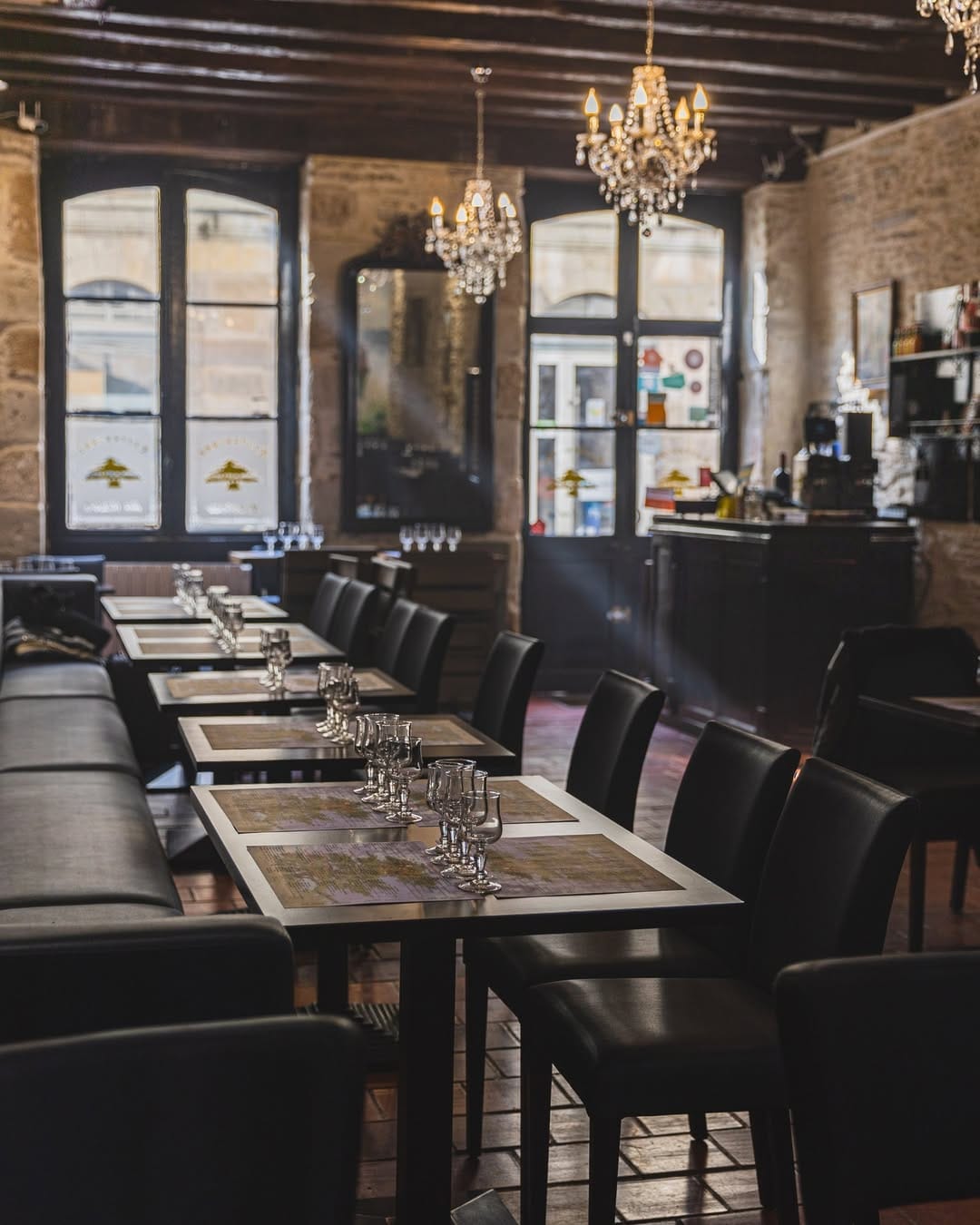
In Nantes, it is at Le Cèdre that you find the spirit of Lebanese syrup desserts. Located at 20 rue Kervegan, on the Île de Nantes, a few steps from the Bouffay district, the restaurant is the first Lebanese restaurant in the city. Since 1988, it has offered a 100% homemade menu, from cold and hot mezze to syrup desserts, in a warm dining room in the heart of Nantes.
You can savour our homemade syrup desserts on site, at lunch and dinner, after your mezze and your grills. Le Cèdre also offers takeaway and delivery within Nantes via Uber Eats and Deliveroo, as well as a catering service on quotation for your weddings, seminars and family meals, with the same homemade cuisine served at the restaurant.
Lebanese baklava is a pastry made of thin layers of filo pastry stacked together, filled with nuts such as pistachio, walnut or almond, then soaked in a fragrant syrup. It belongs to the family of syrup desserts, made in house at Le Cèdre in Nantes.
Baklava is enjoyed at the end of the meal, in small portions, with a coffee or a tea. At Le Cèdre, in Nantes, the syrup desserts can also be savoured with a selection of Lebanese wines.
At Le Cèdre, 20 rue Kervegan, 44000 Nantes, on the Île de Nantes near the Bouffay district. Opened on rue Kervegan in 1988, it is the first Lebanese restaurant in the city, with a 100% homemade menu.
Yes. Baklava is traditionally filled with crushed nuts, pistachios, walnuts or almonds, layered between the sheets of filo pastry. It is this nut heart that gives it its generous flavour.
Yes. Le Cèdre offers takeaway and delivery within Nantes via Uber Eats and Deliveroo, as well as a catering service on quotation for your events.
Homemade mezze, fire-grilled dishes, syrup desserts and Lebanese wines await you at 20 rue Kervegan. Book your table online and come and discover our Lebanese desserts at Le Cèdre, in Nantes.
Le Cèdre has kept Lebanese cuisine alive in Nantes since 1988. As the first Lebanese restaurant in the city, located at 20 rue Kervegan on the Île de Nantes, it offers a 100% homemade menu: cold and hot mezze, fire-grilled dishes, syrup desserts and a selection of Lebanese wines. Baklava and syrup desserts extend the meal in the great tradition of Lebanese sweets. Faithful to the sharing spirit of the Lebanese table, the house welcomes individuals and families at lunch and dinner and puts together a Lebanese buffet on quotation for weddings, seminars and family meals. On site after booking online, for takeaway or delivery via Uber Eats and Deliveroo: the flavours of Lebanon at Le Cèdre look forward to seeing you in the heart of Nantes.